Residency Spotlight: Better Together 2026
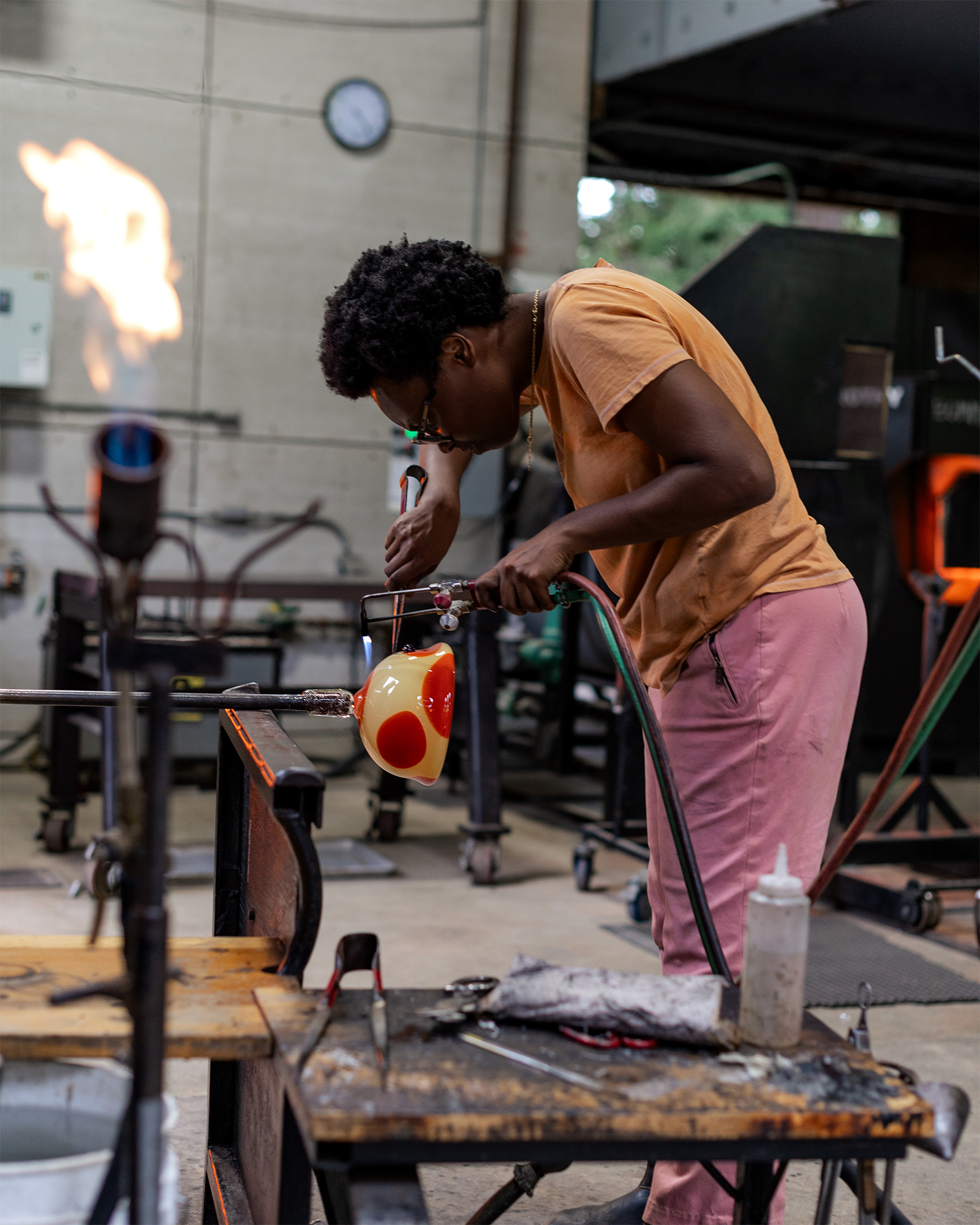
“I love the Pacific Northwest. I’m from the city, so every night I walk up the hill and I can see the stars. I wake up, I get to blow glass. There’s no more beautiful, magical place you can possibly be,” says Adeye Jean-Baptiste, one of this year’s Better Together Residents, while reflecting on their experience on campus.
In early May, Pilchuck welcomed six artists, Adeye Jean-Baptiste, Krist Lee, Diego Loera, Lucian Ramharose, Trenton Quiocho and Margery Cercado, to campus for the annual Better Together Residency, which we host in partnership with Crafting the Future and Hilltop Artists.
Better Together is a self-directed, hot shop-focused residency for a small cohort of BIPOC (Black, Indigenous, and People of Color) professional artists. The program is a collaborative effort across organizations to help foster a culture of inclusion, diversity and community care in the glass arts and provide BIPOC artists with a dedicated space to freely express their creativity, experiment with the material and work in community.
The residency also provides Hilltop Artists alumni with a paid opportunity to assist the residents, the intention being to create pathways for younger BIPOC artists and build intergenerational community. The assistants this year were Candida Delgadillo, Lily Demko, Sky Gillard and Rayvon Murrell.
“Better Together was co-founded through a collective effort that grew out of the first Better Together gathering we organized in Los Angeles during Black History Month 2020,” says Cedric Mitchel, a glass artist and Crafting the Future’s Events and Resource Manager. “That initial gathering brought together myself, Corey Pemberton, SaraBeth Post Eskuche, Nate Watson, Jason McDonald, and Che Rhodes as a space for Black and POC glass artists to be in community, create together, and build visibility within the field.”
The collaboration with Pilchuck began in 2022. The first year, Crafting the Future invited Therman Statom, “recognizing his historic role as the first Black artist at Pilchuck in 1969, along with Terri Sigler and Arthur Wilson,” says Cedric.
“Better Together became a bridge between communities that too often exist in isolation, and it showed us the power of building intentional spaces centered on celebration, visibility, and belonging,” says Crafting the Future founder Corey Pemberton.
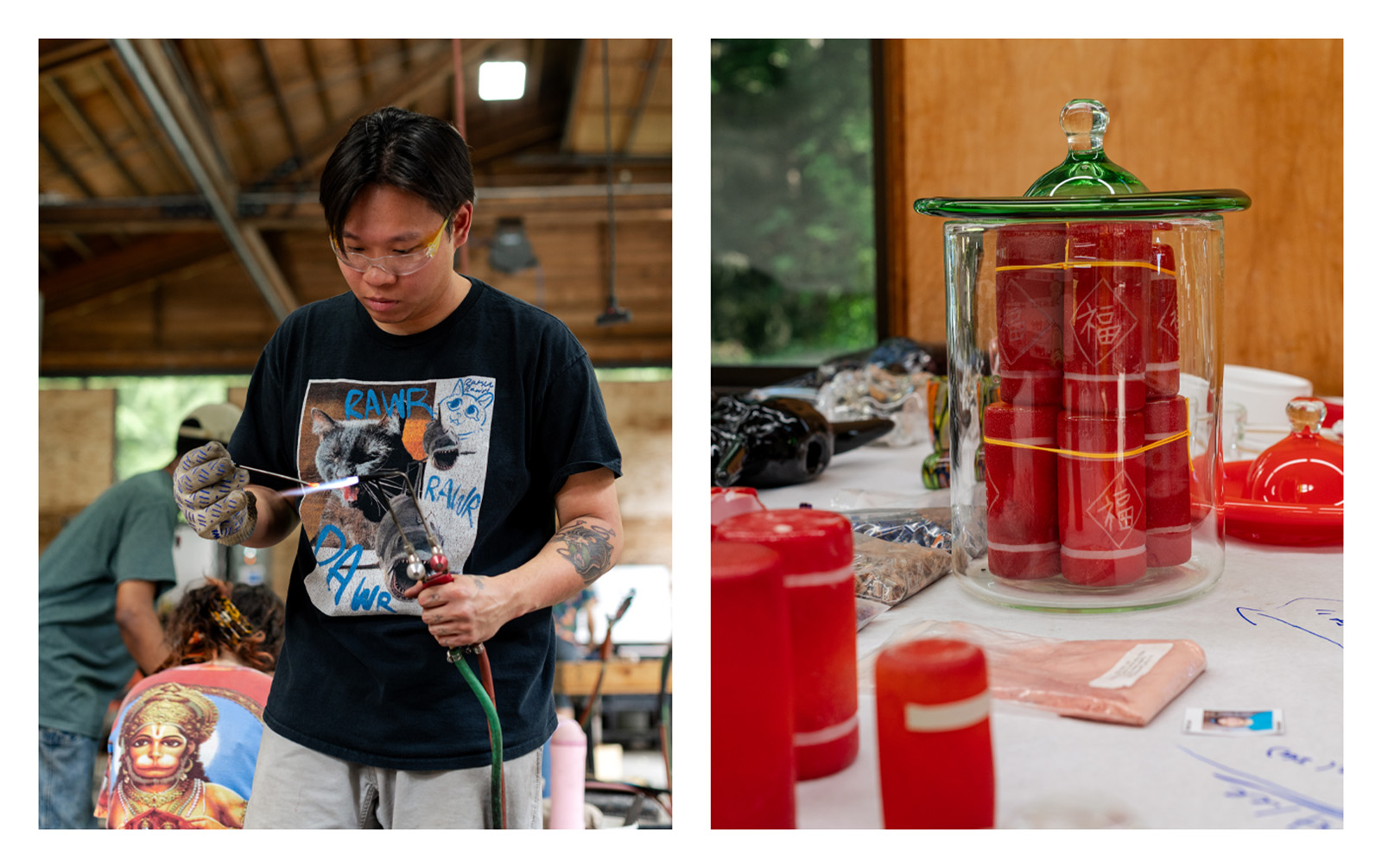
One of the residents, Krist Lee, just completed his MFA at Alfred University and says the time at Pilchuck allowed him to expand upon his MFA. “My whole thesis is about how smell or scents trigger memories,” Krist explains that he incorporates scents into his glass installations. Krist is from Hong Kong and moved to the United States to study glass. His work is deeply influenced by his childhood and Hong Kong’s cultural heritage.
During the residency, Krist made a glass jar full of blown and engraved glass Chinese firecrackers. During the Session 1 walk through, passersby were encouraged to lift the jar’s lid and smell its contents.
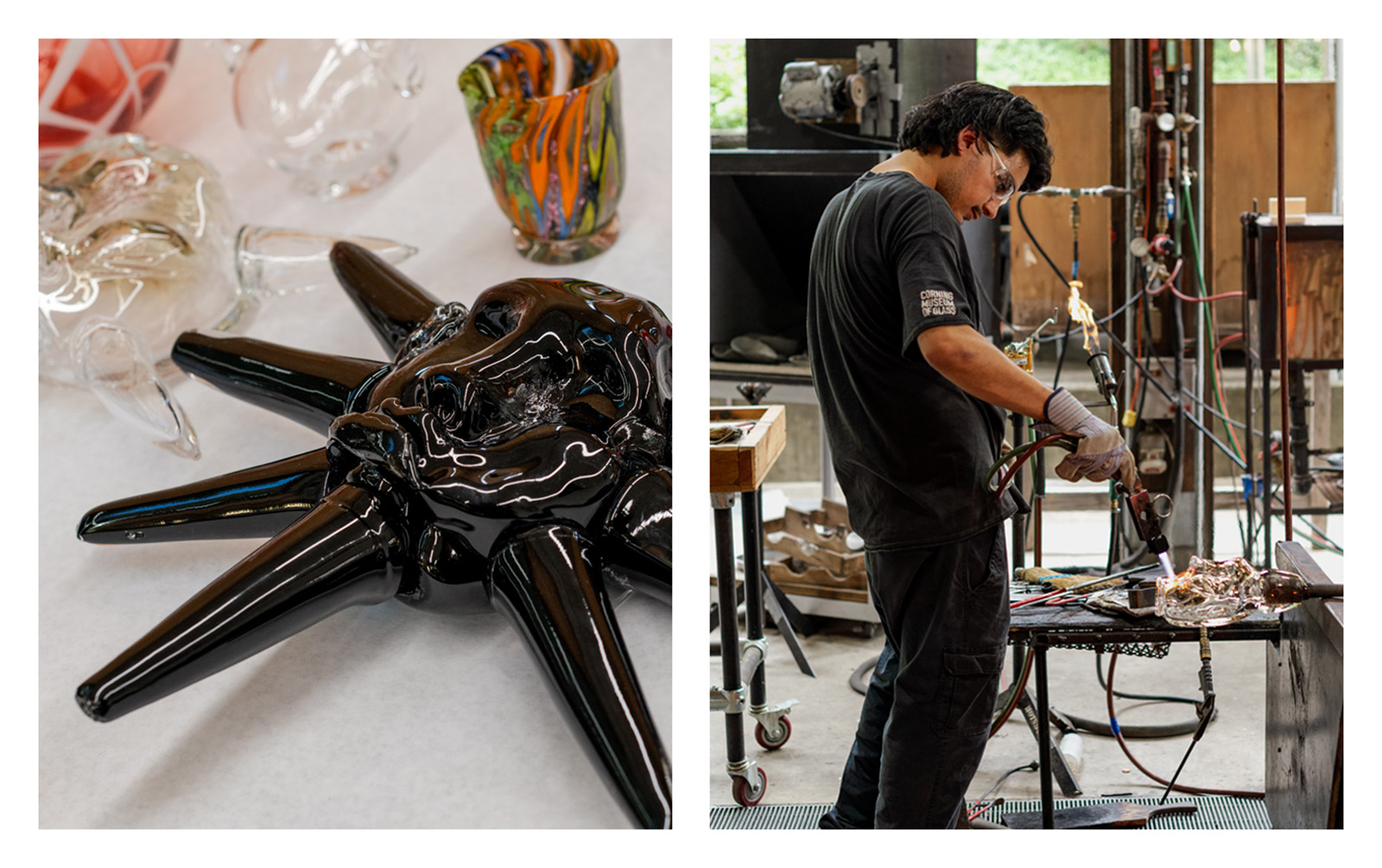
Diego Loera was also expanding on forms from his previous work. Diego is a Mexican American mixed-media artist who specializes in glass and ceramics sculpture.
Diego says he had previously used ceramics to make as series of pinatas, but “Now we're here with that idea, with that design, trying to transfer it into glass.” He also made murrini for one of the pinatas, which he says is an homage to the legacy of Stephen Rolfe Powell who built the program at Centre College where Diego studied.
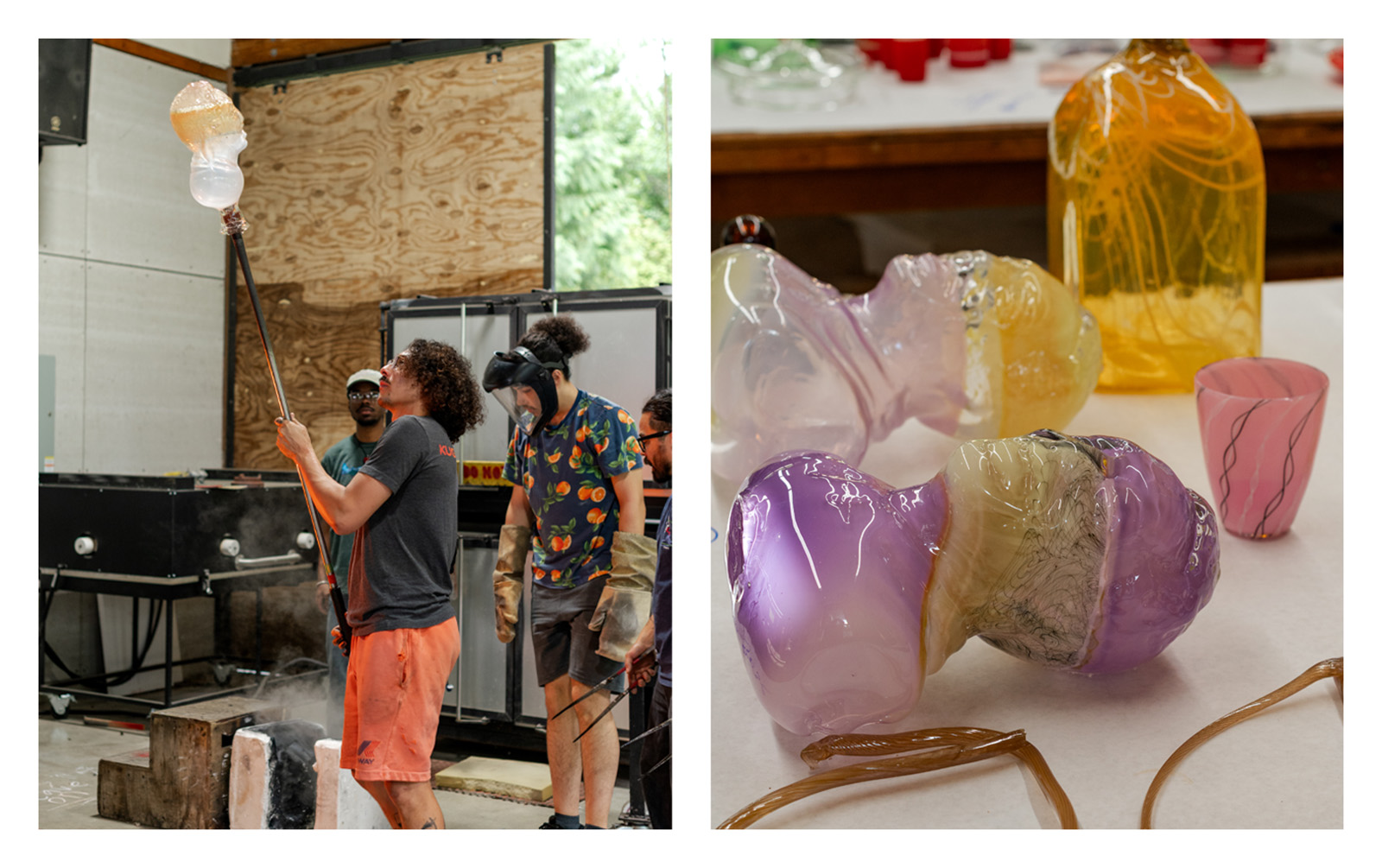
Lucian Ramharose, a mixed Black American artist with Afro-Caribbean roots, came into the residency hoping to expand on a previous body of work exploring his personal and familial history. While here, he worked on two glass busts, using a blow mold. For his thesis show a year ago, he made a series of blown busts of his father. “I wanted to take it a little further [here] and do my grandfather who was a huge artistic inspiration to me... The second bust I'm doing is George Floyd,” he says.
Several of the residents have been to Pilchuck before as students or other roles on campus. Lucian, who has previously been here a student, says this experience was different from a workshop: “[There’s] more room to explore and more time to work... [and] I feel like we've all meshed really well. This feels extremely collaborative.”
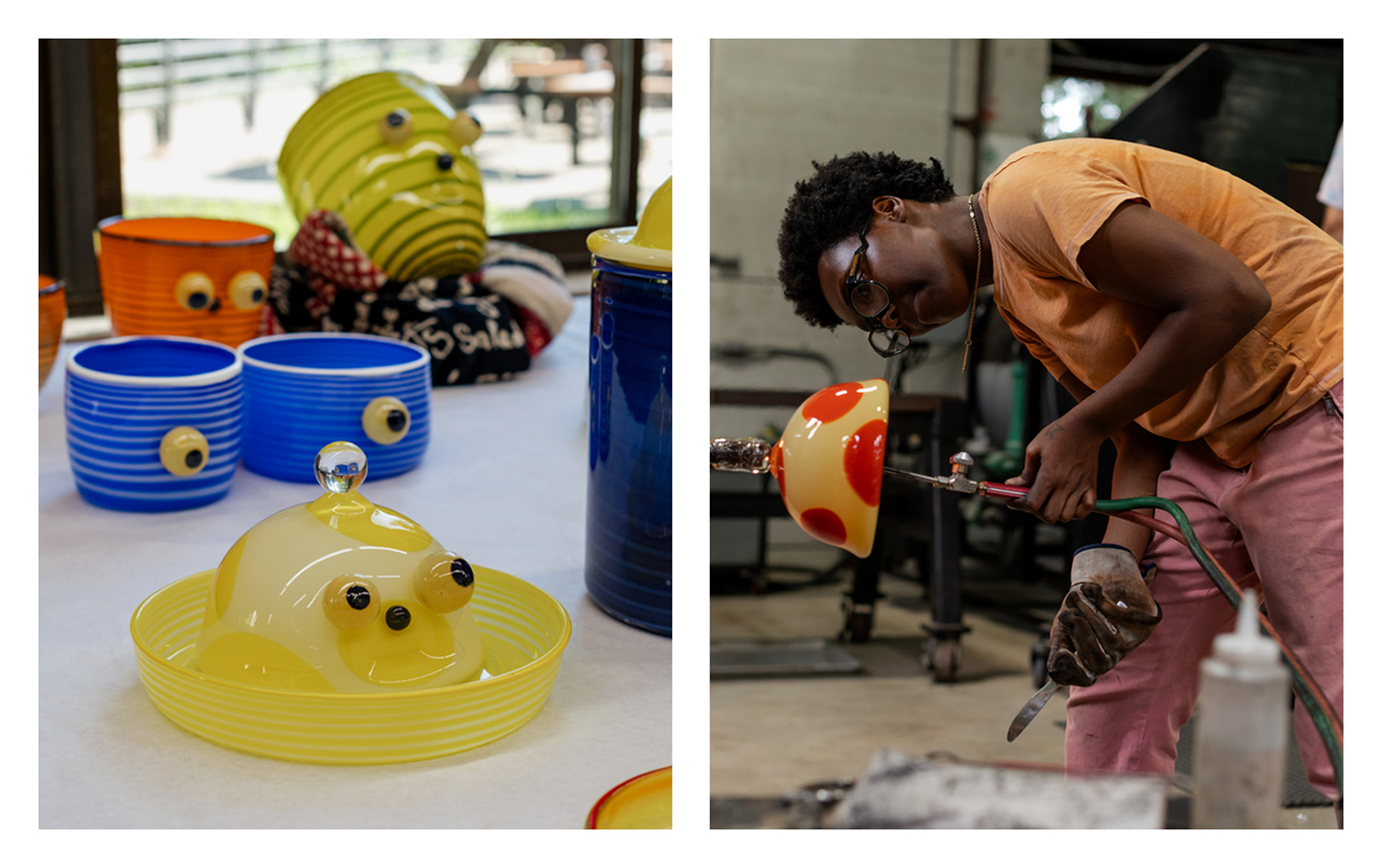
For Adeye, this was their first time on campus: “I've been wanting to come here since I was 14, when I started blowing glass. It means the world to me.” During the residency, they worked on experimenting with color and patterns on a variety of shapes and refining the design for their existing line of lighting pieces. Adeye runs their own glass lighting business where they currently live in West Virginia.
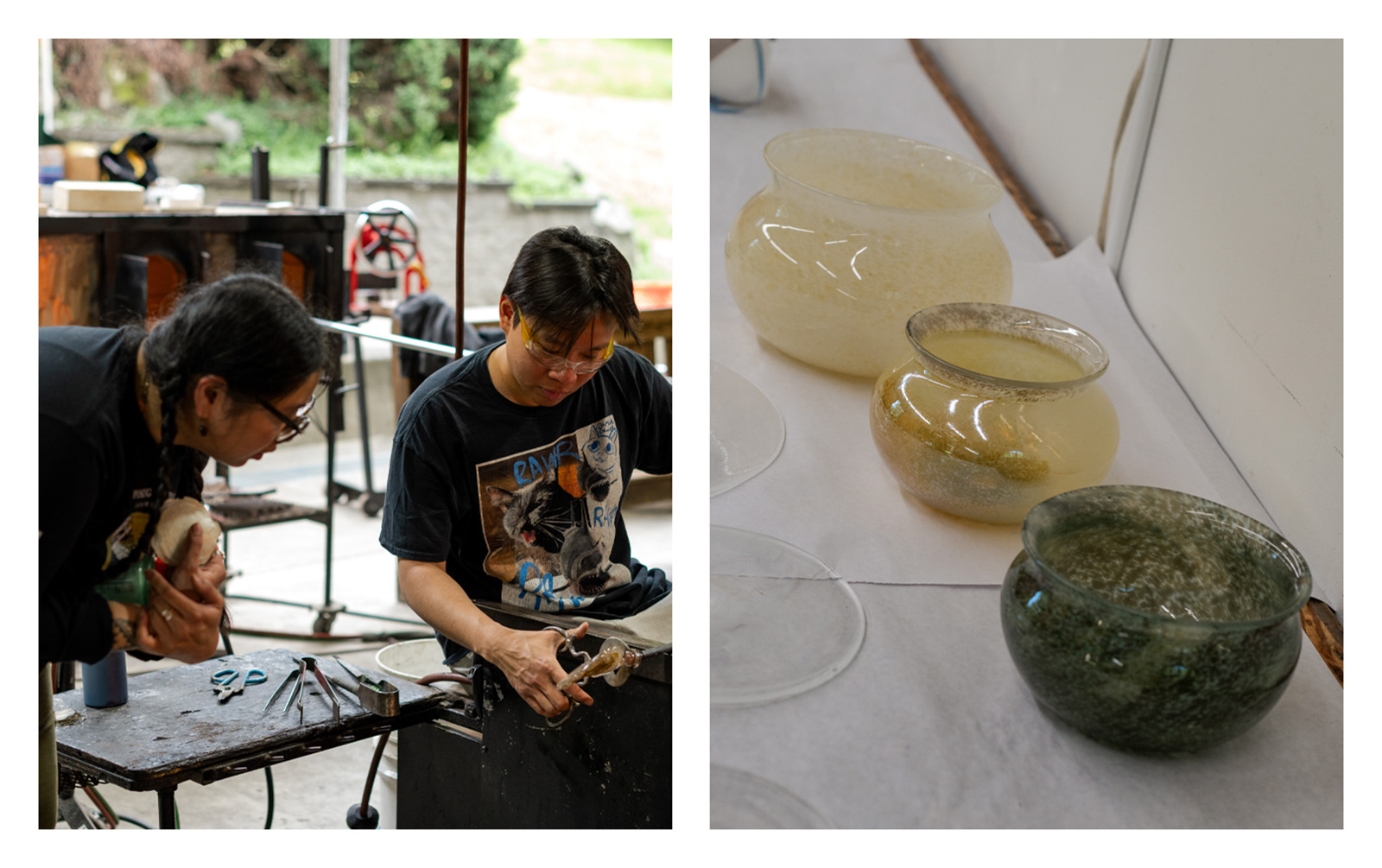
Another resident new to Pilchuck, and new to glass, is Margery Cercado. “I came to Pilchuck as an artist whose foundation of their practice was on learning materials through touch and within the realm of process,” says Margery, a Queer, second-generation Filipinx American mixed-media artist from Seattle. As the resident with the least experience working in hot glass, she says the experience taught her a deep respect and understanding for the complexity and difficulty of the material. She spent her time at the residency learning and experimenting with the material and color application.
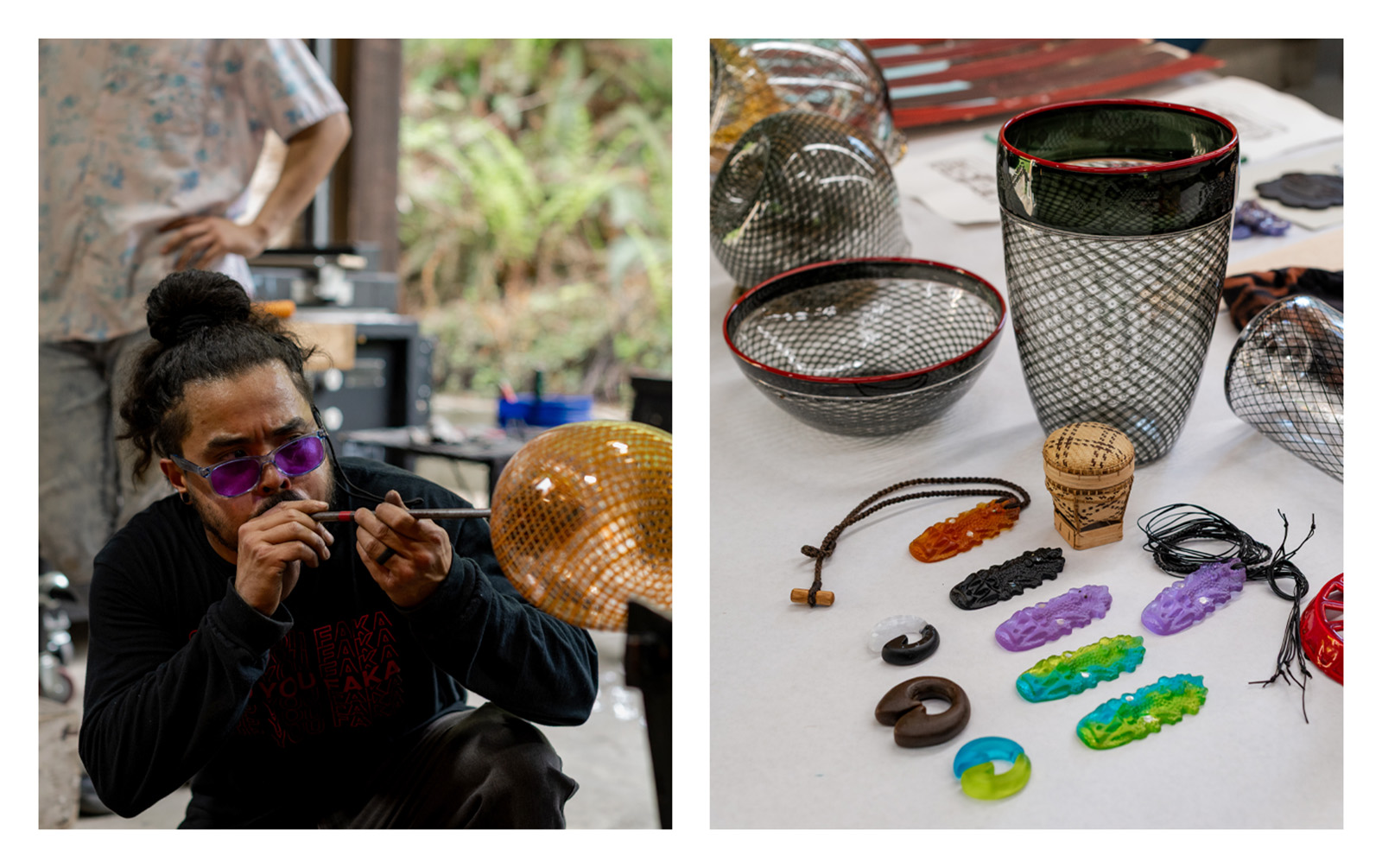
Lead Resident and Tacoma-local, Trenton Quiocho—who has previously been a Guest Artist and Gaffer—used his time to “explore imagery and iconography from Filipino textiles and artifacts.” His work is often inspired by his Filipino American background. While in the hot shop, he explored new patterns for his series of glass Filipino fish traps and experimented with a new series of sculpted forms, “I've been doing a little bit of everything, I guess because I love the facilities up here and the access to things... It’s a break from the daily life routines of like working as a production glass blower.”
Reflecting on the experience, he says, “We have people of all different skill levels, and most of us have never worked with each other, and some people have never been to Pilchuck. So there's a lot for everyone to learn, but I think it's been fun. I appreciate working in community... It's fun to work in this all-BIPOC, diverse group and be able to share and not only make my work but also support people in making their work.”
Corey Pemberton, founder of Crafting the Future and architect of Better Together, says on the importance of creating these spaces int he art world: “When everyone in the room shares the experience of navigating the world as a person of color, there is a level of trust, honesty, and freedom that is rare. We don’t have to code-switch, explain ourselves, or defend our perspectives. And when those defenses fall away, something powerful opens up: the ability to create more freely, connect more deeply, and imagine new possibilities together.”