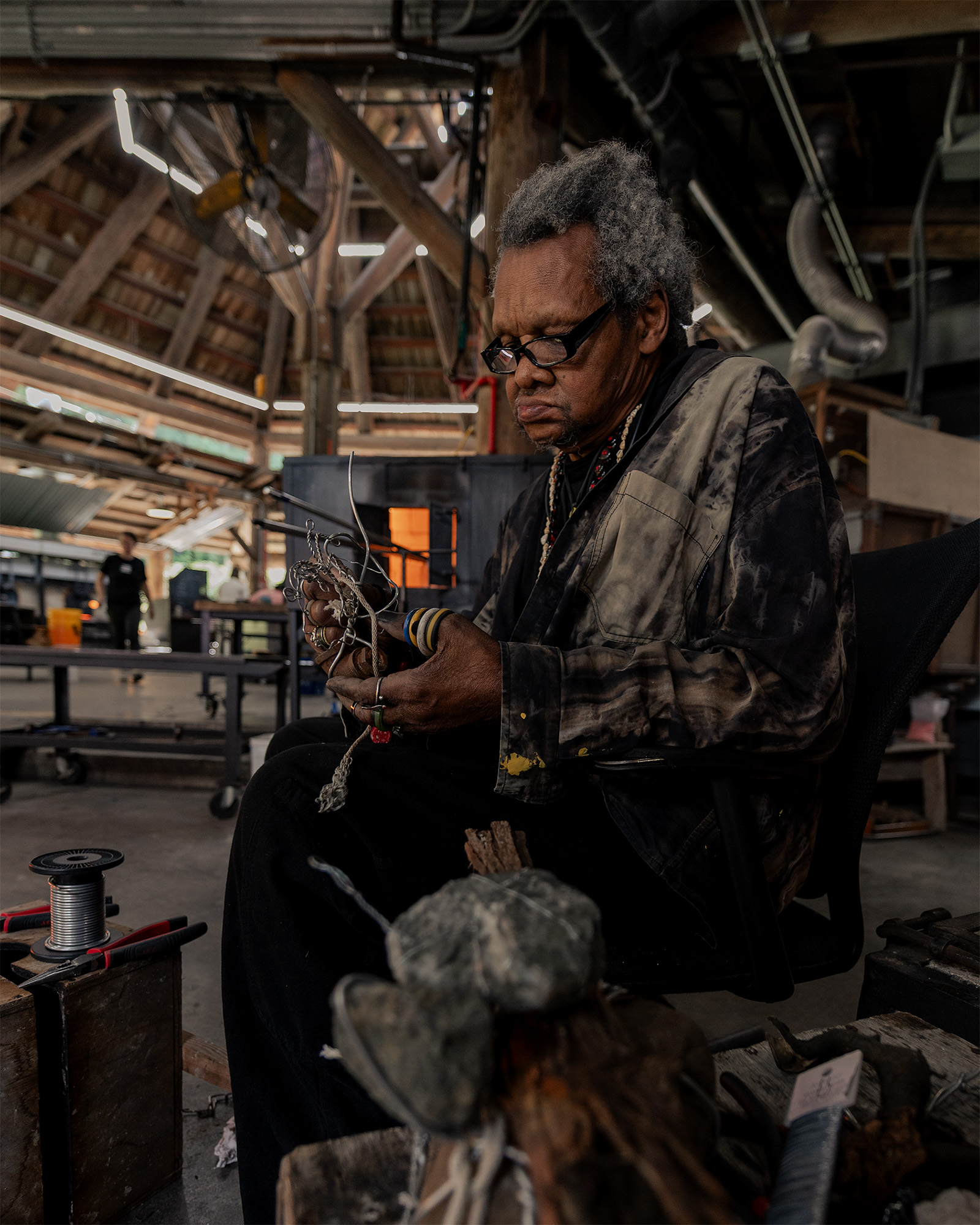
Residency Spotlight: Lonnie Holley
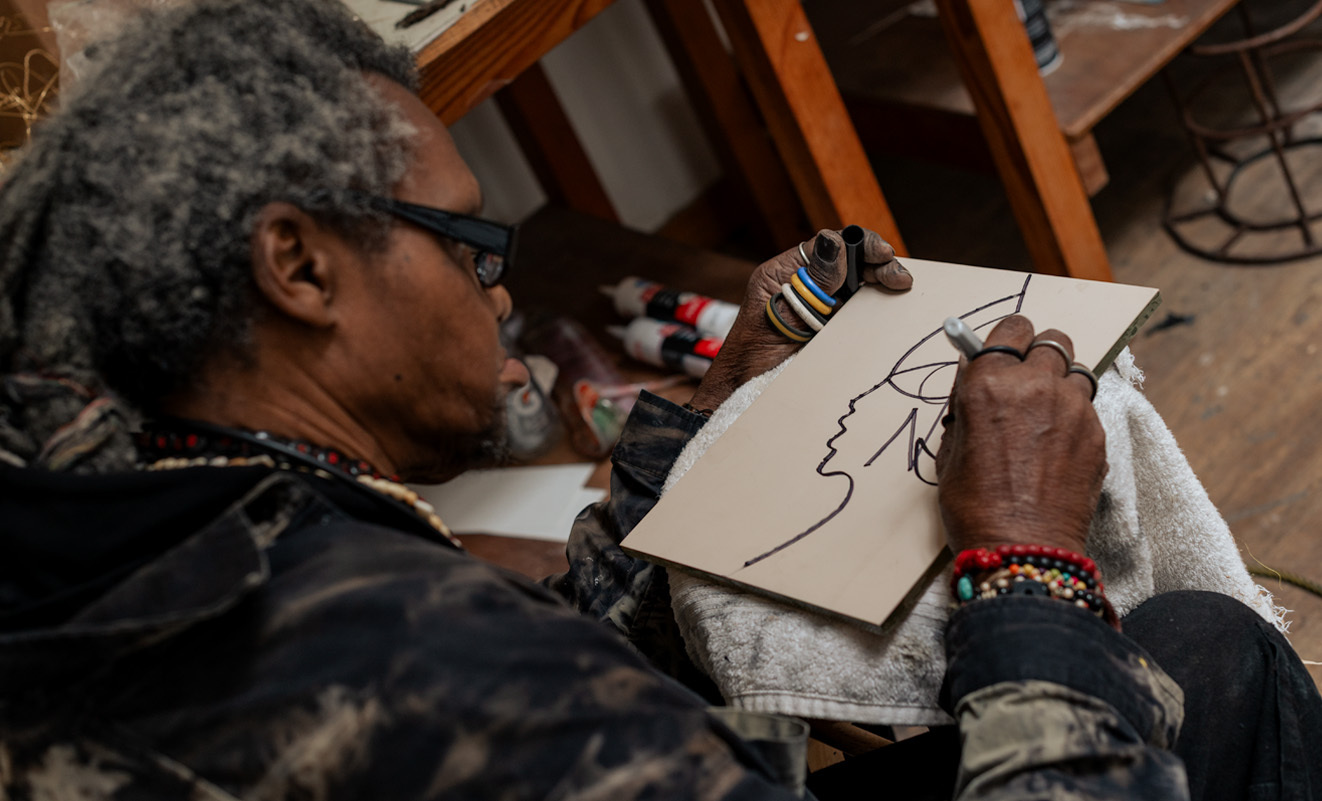
“The last couple of weeks, I've learned intentionality,” says Session 8 Artist in Residence Lonnie Holley. “I've learned that it takes a lot of willpower just to be a person that want to study glass and want to put up with what comes with that study.”
Since our founding, Pilchuck’s Artist in Residence program has been an integral part of our programming. The residency welcomes artists of other mediums to Pilchuck to experience the vast array of possibilities within glass. Every session, Pilchuck hosts Gaffers, a pair of talented glassblowers, who work closely with the Artists in Residence (AiRs) and their Artist Assistants (AAs) to help bring their visions to life in glass. For many years, this residency has brought hundreds of artists from all over the world to experience the magic of glass and Pilchuck.
In 2009, Pilchuck began a partnership with the Museum of Glass and their Visiting Artist program to coordinate several artists each season to attend both of our residencies within the same summer. This collaboration creates the unique and extended opportunity for artists of other mediums to explore the material with support from some of the best glass makers and artists in the country and across several state-of-the-art facilities in our region.
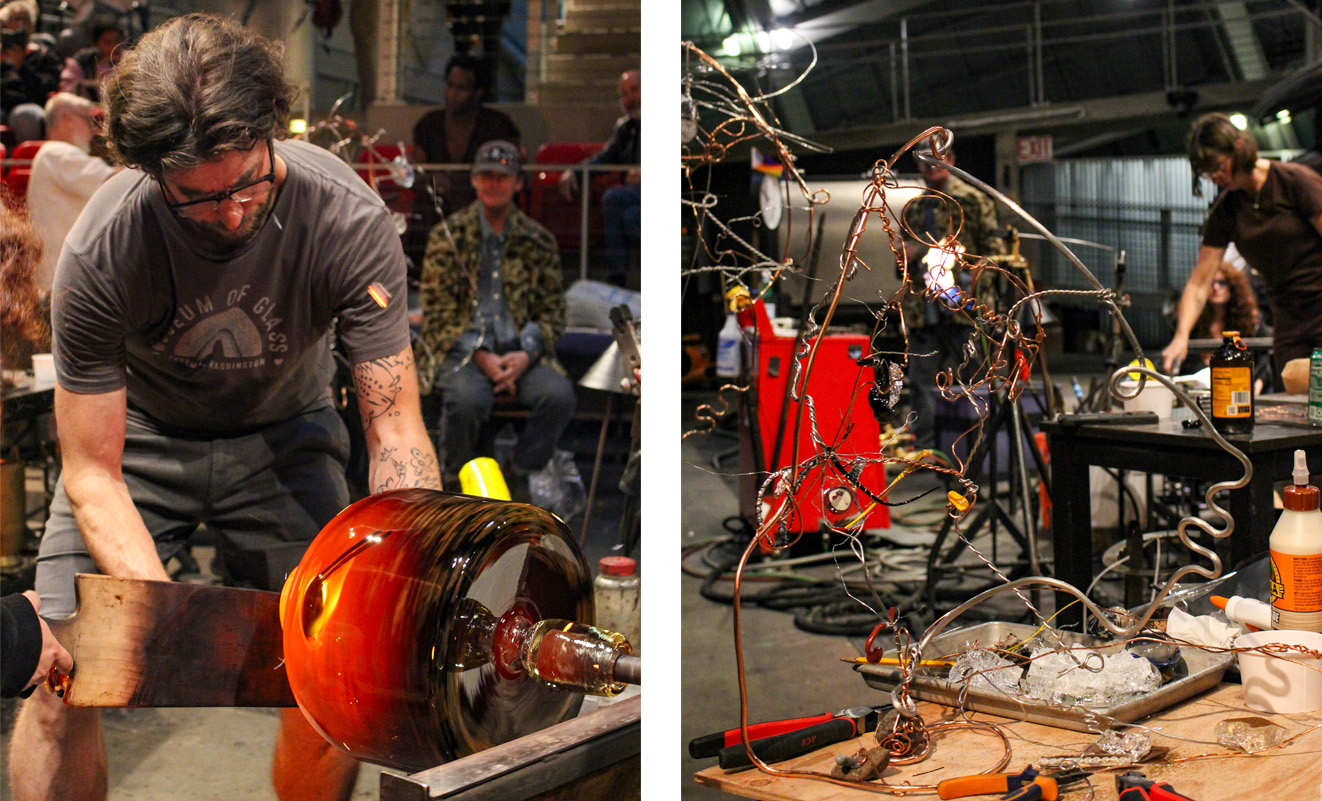
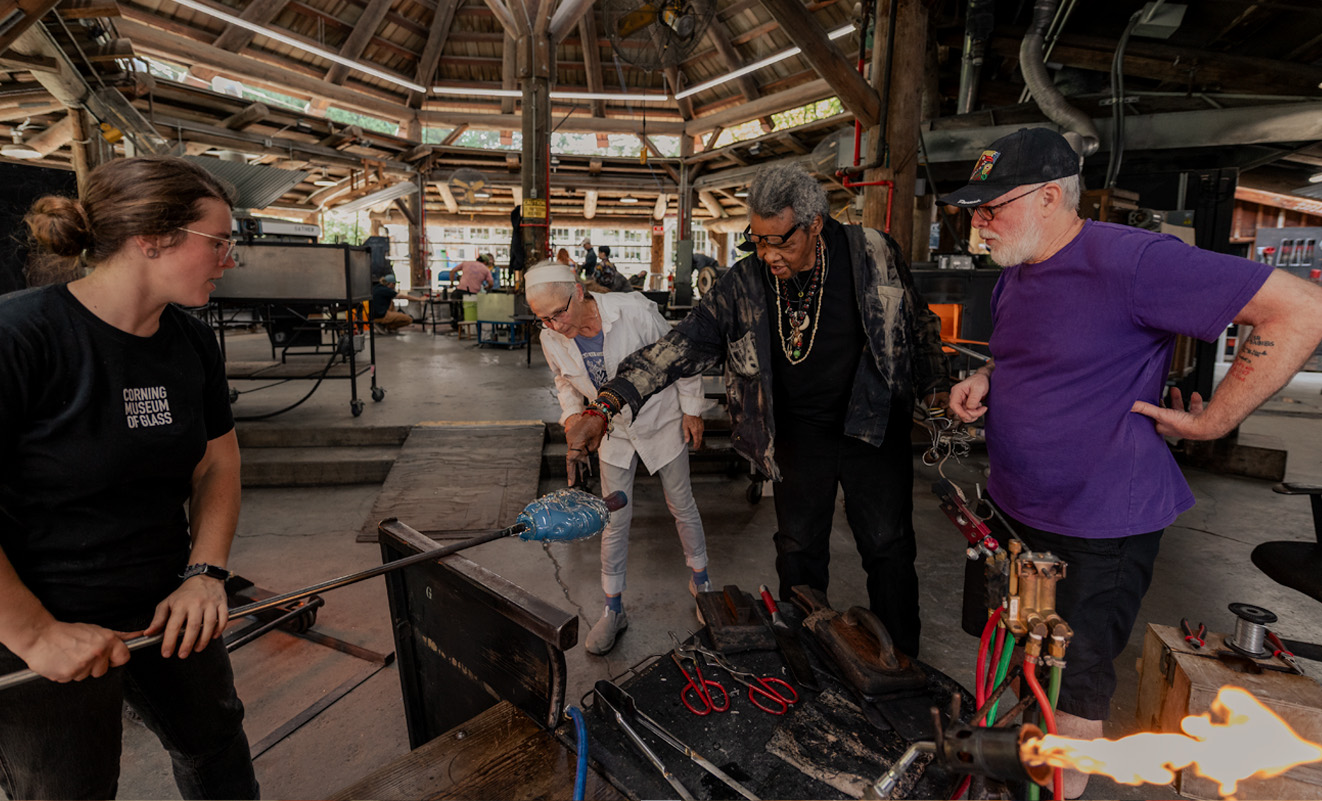
Lonnie Holley joined Gaffers Katie Hubbs and Roberta Eichenberg and Artist Assistants John Drury and Adeye Jean-Baptiste at Pilchuck for the final session of the summer, Session 8: New Directions, September 7 – 14, 2026. Just before coming to Pilchuck, Lonnie completed his residency at Museum of Glass, August 26 – 30, 2026.
This was not Lonnie's first time at Pilchuck. He first visited in the summer of 2023 as a Guest Artist alongside John, who has been attending and teaching at Pilchuck for decades. The two have been collaborators for years, brought together by their shared interest in mixed media and use of found objects in their respective work.
“We're both materialists,” says John. “We both work intuitively. We're not afraid of stuff, and we don't see greater or lesser value in any material.”
While Lonnie was first introduced to hot glass during his time at Pilchuck in 2023, this residency was his first opportunity solely dedicated to exploring the material.
Lonnie was born in Alabama in 1950, and in 1979 began what he calls “the practice of improvisational creativity.” His artistic practice is expansive but has focused largely on music and mixed-media, found-material sculpture and installation work. Building on the African American artistic tradition of working with found objects to create narrative sculptures, Lonnie has built an impressive career with works inspired by his childhood and the systemic challenges that shaped it.
His work has been displayed internationally and is included in the collections of The Museums of Fine Arts, San Francisco; The Metropolitan Museum of Art; The Philadelphia Museum of Art; The Smithsonian American Art Museum; The National Gallery of Art, Washington, DC, and more.
Lonnie's process involves lots of observation, collecting, and improvisation. He creates compositions that tell a story, informed by the materials available, what thoughts they inspire in him, and how they interact with each other. Though hot glass is newer to him, he has been using reclaimed and found glass for decades.
During his Pilchuck residency, Lonnie spent many hours in the Gaffer Station, observing the Gaffers craft a series of vessels while often keeping his hands busy sculpting silhouettes out of wire or carving small pieces of sandstone.
While the Gaffers worked, Lonnie was attentive to every piece of glass discarded throughout the process, saving each one to work into future sculptures.
He explains watching glass get discarded throughout the process of blowing, such as a piece of excess that gets cut off the bottom of a large bubble: “I liked that piece when I first got it. I asked John, ‘Could I have the bottom of it?’ And he said, ‘Well, nobody probably wants it.’ And I got that.”
Lonnie's Pilchuck studio brimmed with materials and creativity. From walks around campus, he collected pieces of dead wood, dried roots, stones of various sizes, and plants. He spent the week working these raw materials, the glass scraps from the hot shop, some clay, and adhesives into a series of sculptures and compositions.
In addition to his sculpture mixed-media work, Lonnie also collaborated with the Gaffers to create many vessels of varying size, some quite large, in clear, red, white, and blue, to be used in future compositions.
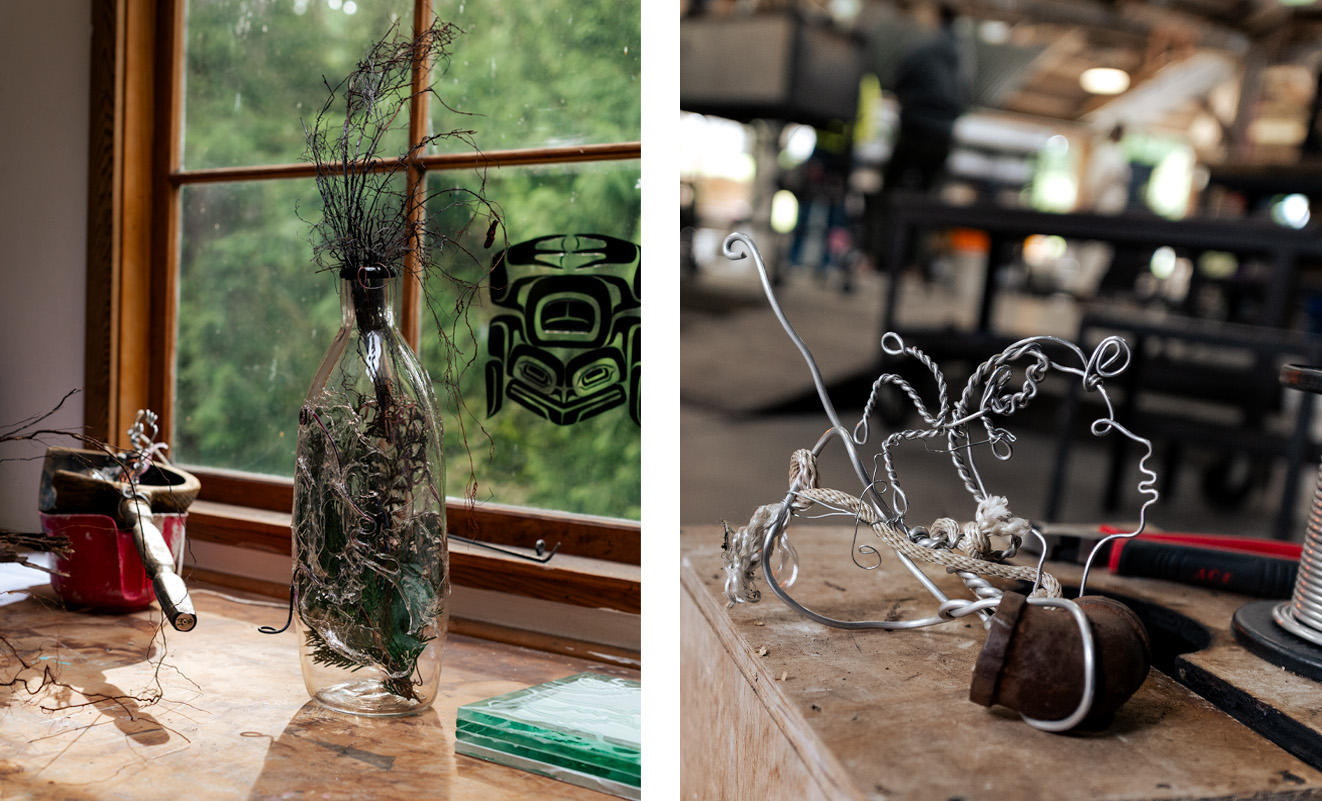
“Well, I've always played in the same thing that you see laying around here. I've always played and dabbled and made things out of things,” says Lonnie, gesturing around his studio at the piles of material and in-progress work. He says his work is often asking or answering a question as the process unfolds.
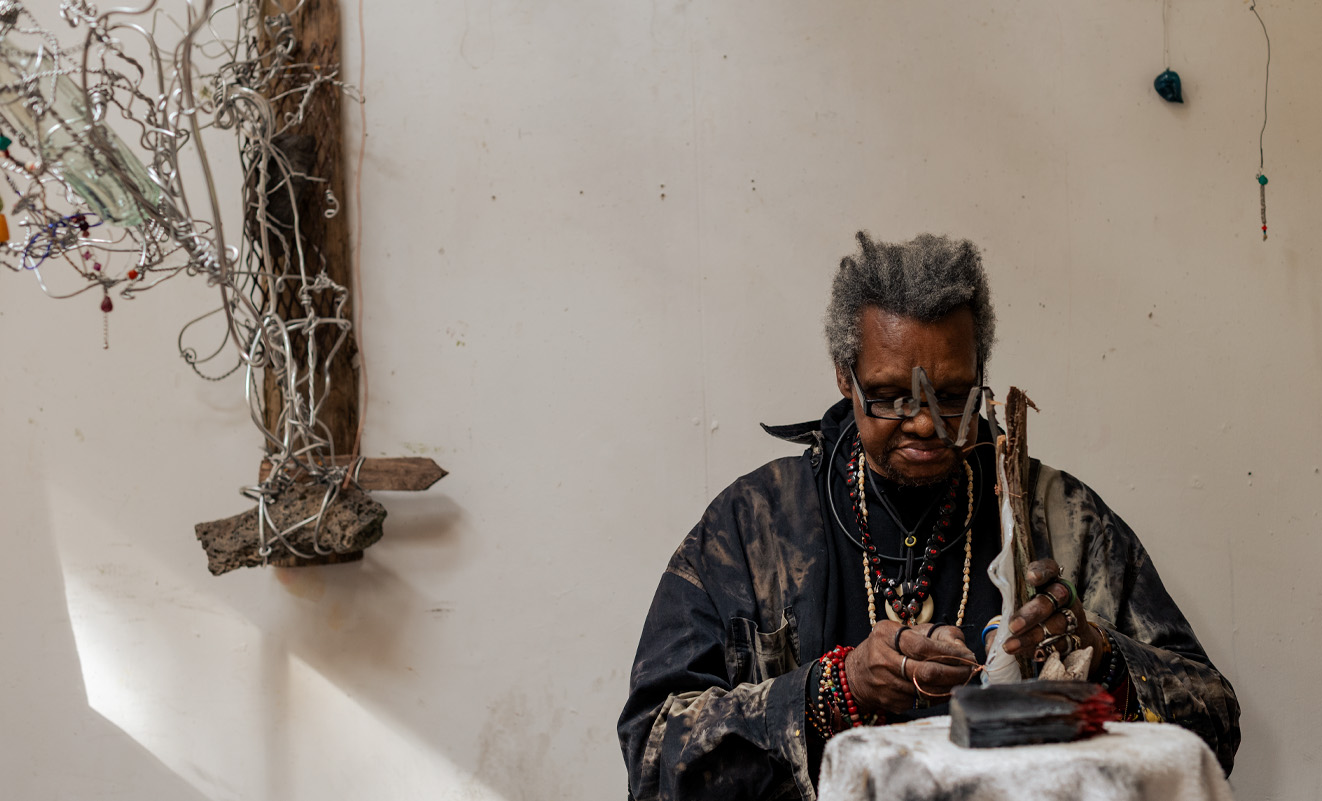
Throughout his Museum of Glass residency the week prior, Lonnie was constantly gathering and creating. If he wasn’t drawing in frit, he was sculpting wire and found objects, incorporating broken pieces of kiln shelf, newspaper, discarded glass and other materials found around the Hot Shop. The vessels the museum’s team created during his residency included holes, handles, and marbles that will allow them to eventually serve as the base of their own mixed media sculptures.
Using a variety of objects like a pencil eraser, paintbrush and his fingers, Lonnie created negative space drawings in colorful layers of frit that were then wrapped around clear and colored bubbles of glass to be shaped into large bowls and cylindrical vessels. This method brought his layered narratives to life in glass in a fitting way — layering his signature imagery over itself to create distinctive motifs of overlapping silhouettes and abstract line patterns in an effect only glass can create.
Forever a student of materials, Lonnie says he is always learning, and with hot glass there's no exception. Though access to hot glass is not always easy to find, he expressed interest in it: “I'm still learning ... and hopefully John and I can find some other studio to the point that I can sit down actually and make that happen myself instead of having someone else to make that happen for me.”
“You get a chance as an artist. If you are interested in learning, you get a chance to learn materials and learn, and then in the process of learning, you can add more value to what other people will know about those materials. And I think that's what my offerings are: is to continue to offer.”
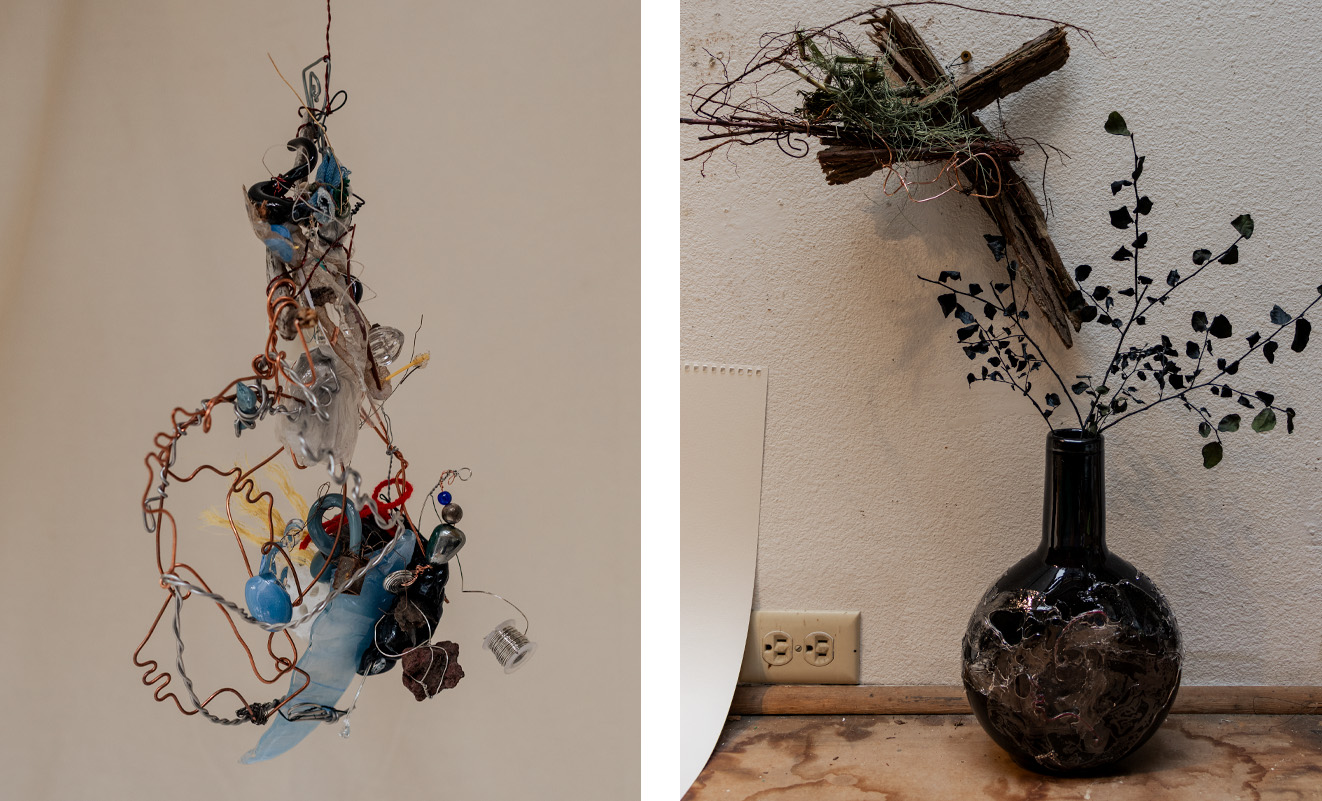
Written in collaboration with Museum of Glass.